COM Express Basic TYPE 7 AND TYPE 6 MODULES PORTWELL About
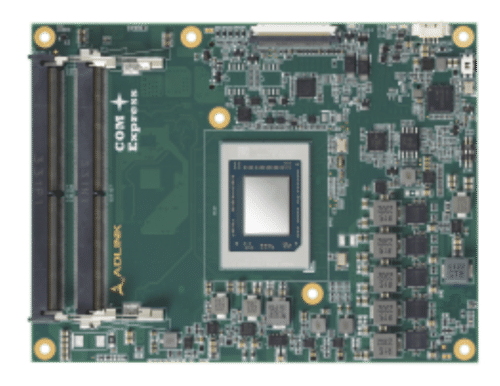
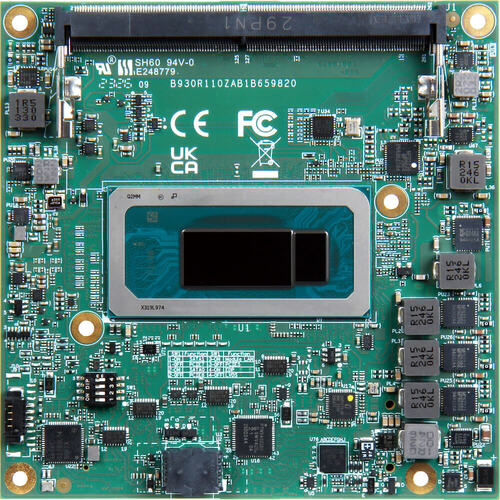
COM Express Basic (125 x 95mm): COMe basic size form factor (125 x 95mm) and types 6 and 7 pin out COM Express Type 7The Type 7 COM-Express module is designed for server-grade applications that require high-speed data and network throughput. It does this by replacing all of the audio and graphics interfaces while reducing the number of SATA ports and USB 2.0 signals and replacing them with 8x PCIe lanes and 4x 10Gb Ethernet ports.
COM Express Type 6The Type 6 COM-Express module is defined by PCI Industrial Computer Manufacturers Group (PICMG). The Type 6 COM-Express provides standardized module interfaces including storage, graphic control, video Interfaces (LVDS, VGA & DDI), and USB 3.0 to meet different application requirements from the various vertical markets.
Advanced Processor and Memory PerformanceCOM Express Basic Type 6/7 modules from Portwell support processors up to Intel Xeon and Core i7, delivering outstanding computational power for data-intensive and industrial tasks. Models accommodate up to 64GB DDR4 SO-DIMM/ECC memory, ensuring reliable performance even during critical operations. This allows seamless multitasking and rapid response times for applications in automation, networking, and servers.
Versatile Networking and Expansion CapabilitiesType 7 modules provide up to 4 x 10GbE Ethernet ports for high-throughput networking, whereas Type 6 includes up to 1 x GbE for broad connectivity options. Integrated PCI Express Gen3, SATA III, and multiple USB interfaces support flexible system expansion, while compliance with PICMG COM Express R3.0 facilitates easy integration into standardized carrier boards.
Rugged Design for Industrial ApplicationsDesigned with a robust multilayer PCB, quality components, and a metallic heatspreader, Portwell modules offer long-term durability. They comply with key industry standards including IEC 60068-2-27/6 for shock and vibration, and support an operational temperature range from -40C to +85C, making them suitable for harsh industrial environments. Optional conformal coating and passive or active cooling ensure reliable operation under varied conditions.
FAQ's of COM Express Basic TYPE 7 AND TYPE 6 MODULES PORTWELL:
Q: How do I install a Portwell COM Express Basic Type 6 or Type 7 module?
A: Installation is performed by mounting the module onto a compatible carrier board using board-to-board connectors, standoffs, and screws, following the COM Express specification. This ensures secure connectivity and reliable performance in embedded systems.
Q: What are the main differences between Type 6 and Type 7 Portwell COM Express modules?
A: Type 6 modules offer onboard graphics and support various display interfaces (DDI/HDMI/DisplayPort, LVDS/eDP), with up to 1 x GbE Ethernet, suited for multimedia and general-purpose computing. Type 7 modules focus on networking, featuring up to 4 x 10GbE ports and no onboard graphics, ideal for edge servers and high-bandwidth applications.
Q: When should I consider using these modules for industrial applications?
A: Portwell Type 6 and Type 7 COM Express modules are well-suited for industrial automation, military, medical, networking, and transportation sectors where reliability, long life cycle support, and 24/7 operation are required. Their rugged design, wide temperature range, and robust networking interfaces make them ideal for demanding environments.
Q: Where are these modules typically deployed?
A: These modules are commonly used in embedded computing systems for factory automation, edge server installations, military and medical devices, and networking infrastructure. Their modularity and compliance with standard carrier boards allow flexible integration into various system architectures.
Q: What benefits does the ECC memory support provide?
A: ECC (Error Correcting Code) memory helps detect and correct memory errors, which enhances system reliability and data integrity-crucial in industrial, medical, and mission-critical environments where uninterrupted operation is essential.
Q: How does the module manage power and ensure system stability?
A: With ACPI 5.0 compliance and hardware monitoring features, the module supports advanced power management, efficient energy use, and system stability. The integrated watchdog timer further guards against system failures by enabling automatic resets if required.
Q: What is the process for ensuring product quality and durability?
A: Portwell uses state-of-the-art manufacturing techniques, including surface mount technology, multi-layer PCB fabrication, precision component mounting, and comprehensive QA testing, to ensure each module meets stringent industrial standards for reliability and longevity.





 Send Inquiry



 Send Inquiry
 Send Inquiry
 Send SMS